Oregano: Uses, Benefits, Nutrition and Cooking Tips
Oregano: Uses, Benefits, Nutrition and Cooking Tips
Oregano is a popular aromatic herb known for its distinctive flavour and versatility in everyday cooking. Commonly associated with Italian and Mediterranean cuisine, it adds a delicious herbal taste to pizza, pasta, sauces, salads and roasted vegetables. Its warm, slightly peppery flavour makes it a useful ingredient for home cooks who want to prepare flavourful meals without complicated recipes.
Whether you enjoy homemade pizza, experiment with pasta dishes or want to improve your everyday seasoning collection, understanding how to use oregano can help you get more from this simple kitchen herb.
What Is Oregano?
Oregano is a culinary herb from the mint family, scientifically known as Origanum vulgare. It is widely used in Mediterranean cooking and is available in fresh and dried forms.
Fresh oregano has a green, leafy appearance and a relatively lively herbal flavour. Dried oregano has a more concentrated taste, making it convenient for seasoning dishes during cooking or sprinkling over finished meals.
Dried oregano is especially popular because it has a long shelf life when stored properly. It is also easy to measure, store and use whenever a recipe needs an aromatic herbal touch.
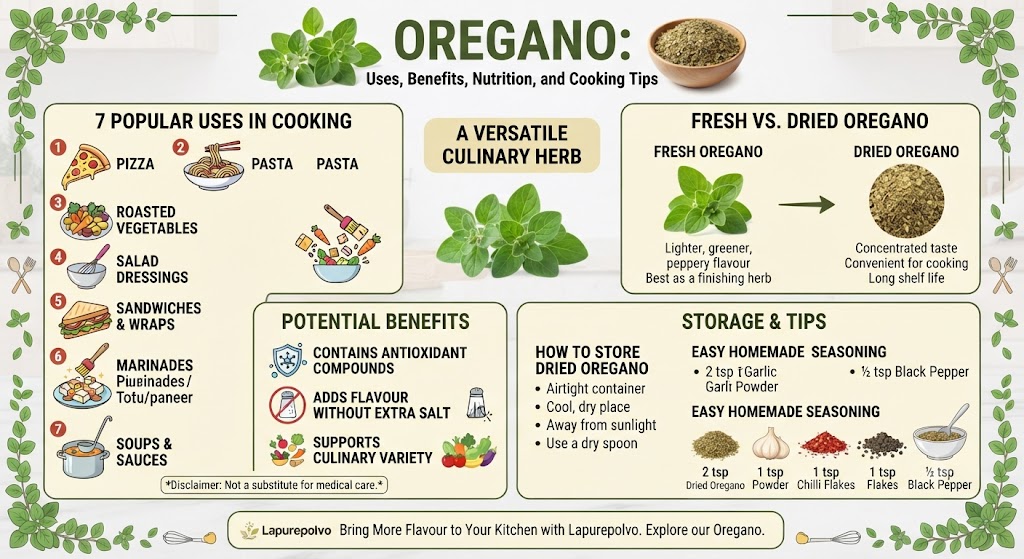
7 Popular Uses of Oregano in Cooking
Oregano is a versatile seasoning that works well in many recipes. Here are seven simple ways to include it in your kitchen.
1. Add Oregano to Pizza
Oregano is a classic pizza seasoning. Sprinkle a small amount over pizza sauce, cheese or your favourite vegetable toppings before baking. You can also add a pinch after baking to bring out its herbal aroma.
It pairs particularly well with tomato sauce, mozzarella, mushrooms, onions, capsicum and olives.
2. Improve the Flavour of Pasta
Pasta dishes become more aromatic with oregano. Add it to tomato-based sauces, creamy sauces or vegetable pasta while cooking. The herb complements garlic, tomatoes, olive oil and black pepper.
For the best flavour, begin with a small quantity and adjust according to your preference.
3. Season Vegetables
Oregano is an excellent seasoning for roasted or sautéed vegetables. Mix it with olive oil, garlic, salt and pepper, then coat potatoes, carrots, capsicum, zucchini or cauliflower before roasting.
This simple combination adds an inviting aroma without requiring an elaborate marinade.
4. Prepare Homemade Salad Dressings
You can use oregano to make a quick dressing for fresh salads. Combine olive oil, lemon juice or vinegar, a little mustard, salt, pepper and dried oregano.
Allow the dressing to rest briefly before serving so the herb has time to release some of its flavour.
5. Enhance Sandwiches and Wraps
Add a pinch of oregano to sandwich fillings, vegetable wraps, grilled sandwiches or homemade spreads. It works well with tomatoes, cheese, roasted vegetables and garlic-based sauces.
Mixing oregano into mayonnaise, hung curd or another suitable spread is an easy way to distribute its flavour evenly.
6. Make Flavourful Marinades
Oregano can be included in marinades for paneer, tofu, mushrooms and vegetables. Combine it with lemon juice, garlic, oil and your preferred seasonings.
For meat or other protein-based recipes, use a marinade appropriate to the ingredients and follow safe food-handling practices.
7. Season Soups and Sauces
A small amount of oregano can add depth to tomato soup, vegetable soup, pasta sauce and homemade pizza sauce. Add dried oregano during cooking to give its flavour time to blend with the other ingredients.
Because dried herbs can have a concentrated taste, avoid adding too much at once.
Potential Benefits of Oregano
Oregano contains naturally occurring plant compounds, including carvacrol and thymol, that have been studied for their antioxidant and antimicrobial properties. However, many findings come from laboratory or preliminary research, and they do not establish that ordinary servings of oregano prevent or treat diseases.
Contains Antioxidant Compounds
Oregano contains several plant compounds that can act as antioxidants in laboratory studies. Antioxidants help researchers understand how foods and their components interact with oxidative processes in the body.
The amount of these compounds varies depending on the plant variety, processing and storage conditions.
Adds Flavour Without Relying on Extra Salt
Using herbs such as oregano can make meals more flavourful. This may help you reduce your dependence on salt in some recipes, although the overall sodium content depends on the other ingredients you use.
Supports Culinary Variety
Herbs can make vegetables, grains, soups and homemade sauces more interesting. Including a variety of herbs and spices is one practical way to create meals with different flavours and aromas.
Important: Oregano is a culinary ingredient, not a substitute for prescribed medicines or professional medical care. Concentrated oregano oils and supplements are different from the dried herb used in food and may have additional risks.
Fresh Oregano vs Dried Oregano
Both fresh and dried oregano are useful, but they suit different cooking situations.
Fresh oregano: Works well as a finishing herb or in recipes where fresh leafy herbs are preferred. Its flavour is generally lighter and greener.
Dried oregano: Convenient for everyday cooking, sauces, marinades and seasoning mixes. Its flavour is often more concentrated, so start with a smaller quantity when substituting it for fresh oregano.
There is no single ratio that works perfectly for every recipe. Adjust the amount according to the herb’s aroma, freshness and the dish you are preparing.
How to Store Dried Oregano Properly
Correct storage helps preserve oregano’s aroma and flavour.
- Store it in a clean, airtight container.
- Keep the container in a cool, dry place.
- Protect it from direct sunlight, heat and moisture.
- Use a dry spoon when measuring the herb.
- Close the package securely after each use.
- Check the aroma and appearance periodically, and discard it if you notice mould, unusual moisture or signs of contamination.
Dried oregano may remain usable for an extended period when stored correctly, but its flavour gradually weakens. Follow any storage guidance and best-before information provided on the product packaging.
Easy Homemade Oregano Seasoning
You can prepare a simple seasoning blend for pizza, pasta and roasted vegetables using ingredients commonly found in the kitchen.
Ingredients:
- 2 teaspoons dried oregano
- 1 teaspoon garlic powder
- 1 teaspoon chilli flakes
- ½ teaspoon black pepper
Method:
- Combine all the ingredients in a clean, dry bowl.
- Mix thoroughly so the seasonings are evenly distributed.
- Transfer the blend to an airtight container.
- Sprinkle a small amount over pizza, pasta, sandwiches or roasted vegetables.
Adjust the chilli flakes and black pepper to suit your preferred level of heat. For the best flavour, prepare small batches and store them away from moisture.
Frequently Asked Questions About Oregano
What is oregano mainly used for?
Oregano is mainly used to season pizza, pasta, tomato sauces, salads, roasted vegetables, marinades and soups. It is particularly popular in Mediterranean-style recipes.
Can oregano be used every day?
Oregano can generally be used as a culinary herb in normal food quantities by most people. If you have an allergy, a medical condition or concerns about concentrated oregano supplements, consult a qualified healthcare professional.
Is dried oregano better than fresh oregano?
Neither is universally better. Dried oregano is convenient and has a concentrated flavour, while fresh oregano offers a greener herbal taste. Choose the form that best suits your recipe.
When should oregano be added during cooking?
Dried oregano can be added while preparing sauces, soups and marinades. It can also be sprinkled over finished dishes. The best timing depends on the recipe and the flavour you want.
How should oregano be stored?
Keep dried oregano in an airtight container in a cool, dry place away from sunlight, heat and moisture. Always use a dry spoon to prevent moisture from entering the container.
Bring More Flavour to Your Kitchen with Lapurepolvo
A well-stocked kitchen makes everyday cooking easier and more enjoyable. Oregano is a convenient herb to keep on hand when preparing pizza, pasta, sauces, sandwiches and vegetable dishes.
Explore Oregano from Lapurepolvo and add this versatile seasoning to your everyday cooking essentials. Start with a small amount, experiment with your favourite recipes and find the flavour combinations that work best for you.
For additional background on this culinary herb, read the Oregano article on Wikipedia.
Disclaimer: This article is intended for general culinary information and is not medical advice. The potential health effects of oregano depend on the form, quantity and available scientific evidence.